A customer can love what your business offers, see the value in it, and still hesitate when it’s time to pay. Often, the issue isn’t the product or service. It’s the amount they need to pay upfront.
Not every customer is ready to pay the full amount in one go. For many, splitting a larger purchase into smaller, manageable payments makes the decision much easier. That’s where payment plans come in.
For businesses, offering payment plans can make higher-value products and services more accessible, remove the upfront cost barrier, and give interested customers another reason to complete a purchase.
Here’s what we’ll cover:
- What a payment plan is and how it works
- The types of businesses that can offer payment plans
- The benefits of offering flexible payment options
- Payment plans vs. financing: understanding the difference
- How to set up a payment plan
- How Practina Pay helps businesses offer flexible payment options
- Best practices and mistakes to avoid
Simplify Payments with Practina
Explore how Practina helps businesses manage payments with ease.
Get StartedWhat Is a Payment Plan?
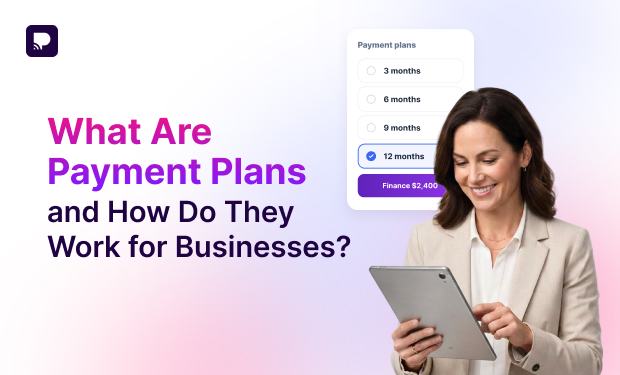
A payment plan is an arrangement that lets customers pay for a product or service in smaller installments over an agreed period instead of paying the entire amount upfront.
Rather than collecting the full purchase price at once, a business divides the total into scheduled payments. These may be weekly, biweekly, or monthly, depending on the agreement.
For example, a customer wants to purchase a service worth $1,200. Instead of paying the entire amount upfront, the business offers a six-month payment plan, and the customer pays $200 each month until the balance is cleared.
The total cost stays at $1,200, but the customer gets more time to pay. Put simply, a payment plan spreads the cost of a purchase over time.
Depending on the arrangement, a payment plan may include:
- An initial deposit or down payment
- Fixed installment amounts
- Agreed payment dates
- An interest-free arrangement, or applicable fees and interest
- A defined repayment period
- Terms for missed payments, cancellations, and refunds
A payment plan doesn’t automatically mean interest-free payments. The business or provider sets the terms, and these should always be communicated clearly to the customer.
How Do Payment Plans Work for Businesses?
Payment plans let businesses collect the cost of a purchase over time while customers get access to a product or service without paying the full amount immediately.
The exact process depends on whether the business manages the plan itself or works with a third-party provider. Here’s how a typical business-managed payment plan works:
- The customer chooses a product or service. They’re interested but would prefer not to pay the entire amount upfront.
- The business offers a payment arrangement. Both sides agree on the total cost, initial deposit (if any), number of installments, payment frequency, and due dates.
- The customer makes the initial payment. This may be a deposit or the first installment, made before receiving the product or starting the service.
- The remaining balance is collected over time. The customer pays according to the agreed schedule.
- The payment plan is completed. Once all payments are received, the purchase is fully paid for.
Example: A dental practice offers a treatment package worth $3,000. A customer is interested but would prefer to spread the cost over six months. The practice sets up the following plan:
| Payment detail | Details |
| Total treatment cost | $3,000 |
| Initial payment | $500 |
| Remaining balance | $2,500 |
| Repayment period | 5 months |
| Monthly installment | $500 |
The customer pays $500 upfront, followed by five monthly payments of $500. The practice has made a higher-value treatment more accessible, and the customer knows exactly what to pay and when.
Before entering any agreement, businesses should set clear terms for missed payments, refunds, cancellations, and any applicable fees.
What Types of Businesses Can Offer Payment Plans?
Payment plans aren’t limited to large purchases or specific industries. Any business where the upfront price could stop an interested customer from buying can benefit from offering them.
- Healthcare and dental practices: Dental treatments, orthodontics, and cosmetic procedures often involve significant costs. Payment plans let eligible customers spread these over an agreed period.
- Fitness and wellness businesses: Gyms, personal trainers, and wellness studios can offer installments for long-term packages, training programs, or specialized services.
- Professional service providers: Consultants, agencies, and designers can split larger project fees. For example, a marketing agency could divide a $6,000 project into three payments tied to project milestones.
- Education and training businesses: Coaching centers, online learning platforms, and training institutes can offer plans for courses, certifications, and longer programs.
- Retail and e-commerce businesses: Businesses selling furniture, electronics, appliances, or jewelry can make larger purchases more manageable.
- Beauty and aesthetic businesses: Salons, spas, and aesthetic clinics can offer plans for treatment packages, procedures, and bundled services.
If customers are interested in what you offer but the upfront cost is holding them back, a payment plan is worth considering.
What Are the Benefits of Offering Payment Plans?
A good product or service doesn’t always lead to a completed sale. Sometimes, customers simply need a way to pay that fits their budget.
1. Make higher-value purchases more accessible
A $2,400 service package can feel like a big expense when paid upfront. Six payments of $400 feel far more manageable. The total stays the same, but the payment structure changes how customers approach the decision.
2. Reduce purchase hesitation
Customers don’t always need more convincing. Sometimes, they need more flexibility. Payment plans let them move forward without arranging the full amount immediately.
3. Encourage higher-value sales
A customer considering a basic package may feel comfortable choosing a more comprehensive option when they can spread the cost. It doesn’t guarantee a bigger sale, but it gives customers more room to consider their options.
4. Improve the customer experience
When customers understand their options, know what they need to pay, and have a clear schedule to follow, the buying process is easier. Offering more than one way to pay also gives them more control.
5. Convert more interested customers
A customer who can’t comfortably pay upfront may postpone or abandon the purchase. A payment plan gives them a way to say yes, so fewer conversations end because of the upfront amount.
Payment Plans vs. Financing: What’s the Difference?
Payment plans and financing are often used interchangeably, but they aren’t the same thing. Both let customers spread the cost of a purchase over time. The main difference is who provides the arrangement and how the repayment is structured.
| Factor | Payment plan | Financing |
| Who provides it? | The business or a payment provider | Typically a third-party lender or financing provider |
| Payment structure | Agreed installments over a set period | Repayment terms set by the financing agreement |
| Interest | May be interest-free or include charges | May include interest, fees, or promotional interest-free terms |
| Approval | Depends on the business’s arrangement | May involve a credit or eligibility check |
| Who collects payments? | The business or its payment provider | Generally the financing provider |
Payment plans
A business can set up its own payment plan so customers pay in installments. For example, a salon may offer a $900 treatment package that customers pay for in three monthly installments of $300. The business sets the terms and is generally responsible for collecting the payments, unless it uses a payment provider to manage the plan.
Financing
Financing typically involves a third-party lender or financing provider that funds the purchase. The customer then repays the provider according to the agreed terms. For example, a customer buying a $4,000 orthodontic treatment may choose an eligible financing option, with the provider deciding eligibility and repayment terms.
The right option depends on the purchase amount, your customers’ needs, your business preferences, and the payment solutions available to you.
How to Set Up a Payment Plan for Your Business
Introducing payment plans doesn’t have to be complicated, but you need a clear structure before offering them.
1. Decide which products or services qualify
Start with the purchases where spreading the cost will make the biggest difference. A dental practice, for example, may offer payment plans for orthodontic treatments but not for routine checkups.
2. Decide the payment structure
Consider:
- Whether an initial deposit is required
- How many installments you’ll offer
- Whether payments are weekly, biweekly, or monthly
- The minimum purchase amount, if any
- Whether interest or additional fees apply
Make sure the structure works for both your customers and your cash flow.
3. Set clear terms and conditions
Define payment due dates, late-payment policies, cancellations, refunds, and what happens if a customer misses an installment. If your arrangement involves lending or credit, check the regulatory requirements that apply before you launch it.
4. Choose a payment solution
Tracking multiple plans manually gets harder as your customer base grows. Choose a solution that supports payment plans and keeps transactions, invoices, and customer payment information in one place.
5. Tell customers about the option early
Don’t wait until checkout. Mention payment plans in your service descriptions, proposals, pricing discussions, and sales conversations so customers can factor them into their decision.
Holiday Season: Make Every Offer Easier to Say Yes To
The holiday season brings more customers ready to buy, and more competition for their attention. A strong holiday offer gives customers a reason to act. A flexible way to pay removes the last obstacle.
With Practina Deals, businesses can create timely offers that give customers a reason to buy now. With Practina Pay, those customers can pay in full, choose a payment plan, or explore financing if eligible.
When the offer and the checkout work together, seasonal interest is far more likely to turn into actual sales.
How Practina Pay Helps Businesses Offer Flexible Payment Options
Practina Pay gives businesses more ways to accept payments and lets customers choose the option that works for them.
1. Offer four payment pathways
Not every customer wants to pay the same way. Practina Pay supports four payment pathways:
- Pay in Full: Customers complete their purchase in one payment.
- Payment Plan: Customers spread the cost over an agreed payment schedule.
- Partial Financing: Customers pay part of the amount upfront and finance the remaining balance, subject to eligibility and available terms.
- Full Financing: Eligible customers finance the full purchase amount through available financing options.
2. Collect payments more easily
Practina Pay supports cards, payment links, invoices, proposals, and payment plans. Whether you’re sending a proposal for a large project or collecting payment for a service package, customers get a convenient way to complete the transaction.
3. Accept 50+ payment methods
Practina Pay supports more than 50 payment methods, giving customers more flexibility at checkout without adding complexity for your business.
4. See how customers pay
Practina Pay provides customer and payment insights, including spending, visits, messages, payments, and lead sources. This gives you a clearer picture of customer activity and how payments contribute to your revenue.
In short, Practina Pay helps close the gap between a customer’s interest and your business getting paid.
Streamline Your Business Payments
Explore how Practina makes payment management easier.
Grow Your BusinessBest Practices and Mistakes to Avoid
A payment plan should make buying easier without creating problems for your business. Keep these practices in mind.
1. Keep terms simple and transparent
Customers should understand the total cost, installment amounts, and due dates without having to ask. If interest, processing charges, or other fees apply, state them upfront. Unclear terms are one of the most common causes of disputes.
2. Set realistic schedules
Longer repayment periods make installments smaller for customers, but they also mean waiting longer for the full amount. Installments customers struggle to keep up with lead to more missed payments. Factor in your margins, cash flow, and collection costs before setting terms.
3. Offer plans where they matter
Focus on the products and services where flexibility genuinely helps customers buy. Offering installments on every small purchase adds admin work without adding much value.
4. Track every payment
Keep an accurate record of each customer’s total amount, installments paid, remaining balance, and upcoming due dates. Without this, it’s easy to lose track of what’s outstanding.
5. Have a clear process for missed payments
Tell customers upfront what happens if they miss a payment, and follow up on overdue installments with a timely, professional reminder.
6. Watch your cash flow
With payment plans, the full purchase amount doesn’t reach your business immediately. Keep an eye on expected installments, outstanding balances, and the impact of late payments.
7. Make payment options visible, but guide customers
Mention payment plans on your pricing pages, in proposals, in your marketing material, and in customer conversations. If you offer several options, help customers understand which one suits them so flexibility doesn’t become confusion.
8. Review and improve
Track how many customers choose payment plans, how consistently installments are paid, and which arrangements work best. Use what you learn to refine your terms and decide which offerings should qualify.
Give Customers More Ways to Say Yes
Payment plans help businesses turn interest into completed purchases by removing the biggest barrier at checkout: the upfront cost. With clear terms, the right offerings, and a reliable payment solution, they can support more sales without adding unnecessary admin.
Practina Pay gives every customer a way to pay that works for them, from paying in full to spreading the cost over time.
See how Practina Pay can help your business offer flexible payment options. Book a demo today.
FAQs
Q: Can any business offer payment plans?
A: Yes. Businesses can offer payment plans for selected products and services, either by managing the arrangement themselves or through a payment provider.
Q: Are payment plans interest-free?
A: Not necessarily. Some are interest-free, while others include interest, service charges, or other fees. The business or provider sets the terms, and customers should see them before agreeing.
Q: Do I need to ask for a deposit?
A: No, it’s your choice. Some businesses take an initial deposit to secure the sale and reduce risk. Others start straight with the first installment. A deposit makes more sense for higher-value purchases.
Q: How long should a payment plan be?
A: There’s no fixed rule. Shorter plans get the full amount to you sooner, while longer plans make each installment smaller for the customer. Match the length to the purchase value and your cash flow.
Q: What happens if a customer misses a payment?
A: That depends on the terms you set. Your agreement should state any grace period, late fees, and what happens to the product or service if payments stop. Share these before the customer signs up.
Q: Are payment plans worth it for small businesses?
A: Yes, especially for businesses selling higher-value services. Offer them only where they make a real difference, and keep track of outstanding payments so your cash flow stays healthy.
Q: Can customers still pay in full?
A: Yes. Offering a payment plan doesn’t remove the option to pay upfront. Customers choose whichever works better for them.