

How to Create a Better Customer Experience From Discovery to Checkout
Getting customers interested is one thing. Getting them all the way to checkout is another.
Think about it. Someone sees your business on social media, clicks through to learn more, checks out what you offer, and is ready to buy. Then suddenly, things get confusing. Information is hard to find. There are too many steps. The payment process feels like work. And just like that, they’re gone.
That’s why a good digital customer experience is about more than having a nice website or being active on social media. Every step should feel smooth, simple, and easy to follow. A strong digital customer experience strategy looks at the entire journey, from the first “Oh, this looks interesting” moment to the final payment.
The goal is to remove unnecessary friction and make it easier for customers to do what they came to do. This is where digital customer experience management comes in. It helps businesses connect the different parts of the customer journey instead of treating discovery, engagement, checkout, and payment as completely separate experiences.
Because today, customers don’t think in stages. They just want things to work.
In this guide, we’ll break down how to create a smoother customer journey from discovery to checkout—and the simple changes that can make a real difference along the way.
Ready to elevate your customer experience?
Create smoother, more connected experiences at every step.
Try PractinaWhat Is the Customer Journey?
Customers don’t think in terms like “discovery,” “consideration,” or “conversion.”
Their journey is much simpler:
What’s this?” → “Looks interesting.” → “Let me check it out.” → “Okay, I want this.” → “That was easy.”
That entire path is the customer journey.
It starts when someone first discovers your business and continues through the moment they explore, decide, and finally complete a purchase.
But here’s the catch: one frustrating step can ruin the whole experience.
A customer might love your social media, find exactly what they need on your website, and be ready to buy. But if checkout feels confusing? They may leave before completing the purchase.
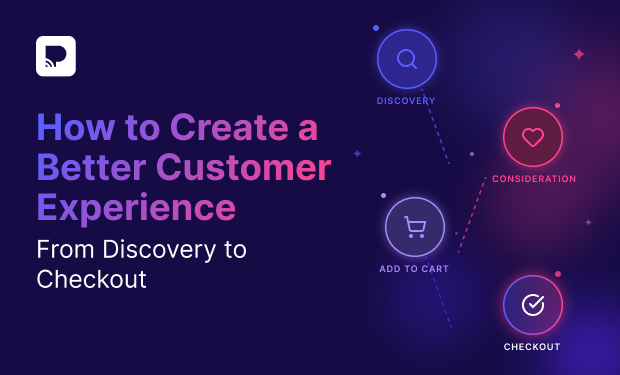
Here’s what the journey usually looks like:
Discovery → “Wait, what’s this?”
A customer finds your business through social media, Google, an ad, a review, or a recommendation.
Your goal: Get their attention and make them want to know more.
Consideration → “Okay, tell me more.”
They explore your website, services, pricing, and reviews.
Your goal: Make information easy to find and understand.
Decision → “Yep, I want this.”
They’re interested and ready to take the next step.
Your goal: Make that next step obvious and easy.
Checkout → “Please don’t make this difficult.”
They’re ready to complete the purchase.
Your goal: Keep the process simple and give them a smooth way to pay.
At the end of the day, customers don’t care what stage they’re in.
They remember one thing:
Was the whole experience easy—or was it a headache?
Why Customer Experience Matters at Every Stage
A customer’s experience is shaped by every interaction they have with your business. From the moment they discover you to the moment they complete a purchase, each step can influence what they do next.
When the journey feels clear and easy, customers can move forward with confidence. They can quickly find information, understand their options, and take the next step without unnecessary confusion or effort.
Step 1: Make It Easy for Customers to Discover Your Business
Before customers can choose your business, they first need to find it.
People may discover you through Google, social media, online reviews, ads, or recommendations. Make sure your business is present where your potential customers are likely to look.
Once they find you, they should quickly understand what you offer, who you help, and what they should do next. Clear information and consistent messaging can make a strong first impression and encourage customers to explore further.
Step 2: Make It Easy to Explore Your Business
Once customers are interested, they usually want to learn more before making a decision.
They may visit your website, check your products or services, compare prices, read reviews, or look for answers to their questions. Make this information easy to find and understand.
Try not to make customers click through multiple pages just to find a simple answer. The less effort it takes to explore your business, the easier it can be for customers to move closer to a decision.
Step 3: Make the Next Step Clear
A customer may like what you offer but still leave if they are unsure what to do next.
Should they call you? Book an appointment? Request more information? Add something to their cart?
Make the next action clear. Use simple calls to action and guide customers toward the step you want them to take.
Don’t make customers guess. Make the next step obvious.
Step 4: Make Checkout Simple and Flexible
When a customer is ready to make a purchase, the checkout process should not become the hardest part of their journey.
Keep the process simple and avoid unnecessary steps. Depending on your business, customers may also appreciate having different ways to complete their payment.
This could include one-time payments, invoices, payment requests, payment plans, financing options, or in-person payments.
The goal is to make it easier for customers to choose an option that works for them and complete their purchase without unnecessary frustration.
Step 5: Continue the Experience After Payment
The customer experience doesn’t always end when a payment is completed.
Customers may want to check their payment history, review an outstanding balance, receive updates, or interact with your business again in the future.
A smooth experience after checkout can be just as important as the experience before it. It can help customers feel more confident and make future interactions with your business easier.
At every stage, the goal is the same: Remove unnecessary friction and make it easier for customers to move forward.
Common Customer Experience Mistakes Businesses Should Avoid
Creating a better customer experience doesn’t always mean adding more features or tools. Sometimes, it simply means removing the things that make the journey harder than it needs to be.
Here are a few common mistakes to avoid:
▪ Making Important Information Hard to Find
Customers shouldn’t have to search through multiple pages to understand what you offer, how much it costs, or how to contact you. Keep important information clear and easy to access.
▪ Giving Customers Too Many Steps
Every extra click, form, or unnecessary question can create friction. Keep the process as simple as possible, especially when customers are ready to take action or make a purchase.
▪ Making the Next Step Unclear
If customers don’t know whether they should call, book, request information, or make a payment, they may do nothing at all. Clearly guide them toward the next step.
▪ Creating a Complicated Checkout Experience
A customer may be ready to buy, but a confusing payment process can still cause frustration. Make checkout straightforward and provide convenient payment options when possible.
▪ Treating Payment as the End of the Relationship
The customer experience continues after checkout. Payment history, outstanding balances, follow-up communication, and future engagement can all shape how customers feel about doing business with you again.
The good news? Businesses don’t need to manage every part of this journey with completely separate tools.
Create a Smoother Checkout Experience
Make payments simpler and more convenient with Practina Pay & Terminal.
Get StartedHow Practina Helps Businesses Create a Better Customer Experience
Managing the customer journey can become complicated when businesses use different tools for marketing, customer information, invoices, and payments.
Practina brings many of these activities together in one place, helping businesses manage their customer experience more easily.
▪ Make Payments Easier With Practina Pay
Practina Pay is Practina’s payment platform. Think of it as one place where a business can handle different payment-related tasks instead of managing them through several separate tools.
With Practina Pay, businesses can:
- Accept one-time payments from customers.
- Send invoices and payment requests.
- Offer payment plans and financing options.
- Accept payments online and in person.
- View customer payment history and outstanding balances.
- Track transactions and payouts.
- Set up customer rewards.
For example, imagine a customer is ready to pay for a service. Instead of using one tool to send an invoice, another to collect the payment, and another to check the transaction later, the business can manage these activities through Practina Pay.
This creates a simpler experience for both the business and the customer.
▪ Accept In-Person Payments With Practina Terminal
Practina Terminal is the physical payment device that works as part of Practina Pay.
It is designed for businesses that accept payments face-to-face. A customer can simply tap, insert, or swipe their card on the terminal to pay.
For the business, the terminal is connected to Practina Pay, so payment activity can be managed through the same Practina platform.
Businesses can also manage their terminal setup, activation, payment settings, rewards, and transaction activity from the dashboard.
In simple terms:
Practina Pay is the payment platform. Practina Terminal is the device businesses use to accept payments in person.
▪ Understand Payment Costs With AI Savings Analysis
Practina Pay also helps businesses understand how much they are currently spending on payment processing.
Businesses can upload up to three months of their payment processing statements. Practina’s AI analyzes the statements, breaks down the fees, identifies the effective processing rate, and highlights potential savings opportunities.
This gives businesses a clearer picture of where their payment costs are going instead of making them try to understand complicated processing statements on their own.
▪ Bring More of the Customer Journey Together
From managing customer interactions to accepting and tracking payments, Practina helps businesses bring important activities into one connected platform.
That means businesses can spend less time switching between different tools and more time focusing on creating a simple, convenient experience for their customer
Conclusion
Creating a better customer experience doesn’t have to mean completely changing how your business works.
Start by looking at the journey from your customer’s perspective. Can they easily find your business? Is it simple to understand what you offer? Do they know what to do next? And when they are ready to pay, is the process easy?
Every step matters.
A smooth experience from discovery to checkout can help remove unnecessary frustration and make it easier for customers to do business with you. The goal is simple: make every interaction feel clear, convenient, and connected.
With tools that help businesses manage their online presence and payment activities in one place, Practina can support a more connected customer journey—from the moment someone discovers your business to the moment they complete a payment. Because at the end of the day, customers may not remember every step of the journey.
FAQs
Q: What Is Customer Experience?
A: Customer experience is how a person feels about their interactions with your business. It includes every step, from discovering your business to making a purchase and interacting with you afterward.
Q: What Is a Digital Customer Experience?
A: A digital customer experience includes the interactions customers have with your business online. This can include your website, social media, online communication, payment process, and other digital touchpoints.
Q: How Can Businesses Improve the Customer Experience?
A: Businesses can improve the customer experience by making information easy to find, simplifying the customer journey, providing clear next steps, reducing unnecessary friction, and making checkout and payment easier.
Q: Why Is the Checkout Experience Important?
A: Checkout is the final step before a customer completes a purchase. If the process feels confusing or complicated, customers may become frustrated or decide not to complete the transaction.
Q: How Can Practina Help Improve the Customer Experience?
A: Practina helps businesses manage their online presence and customer interactions from one platform. With Practina Pay, businesses can also manage payment activities, including one-time payments, invoices, payment requests, flexible payment options, and in-person payments through Practina Terminal.